Get Your Free Quote…!
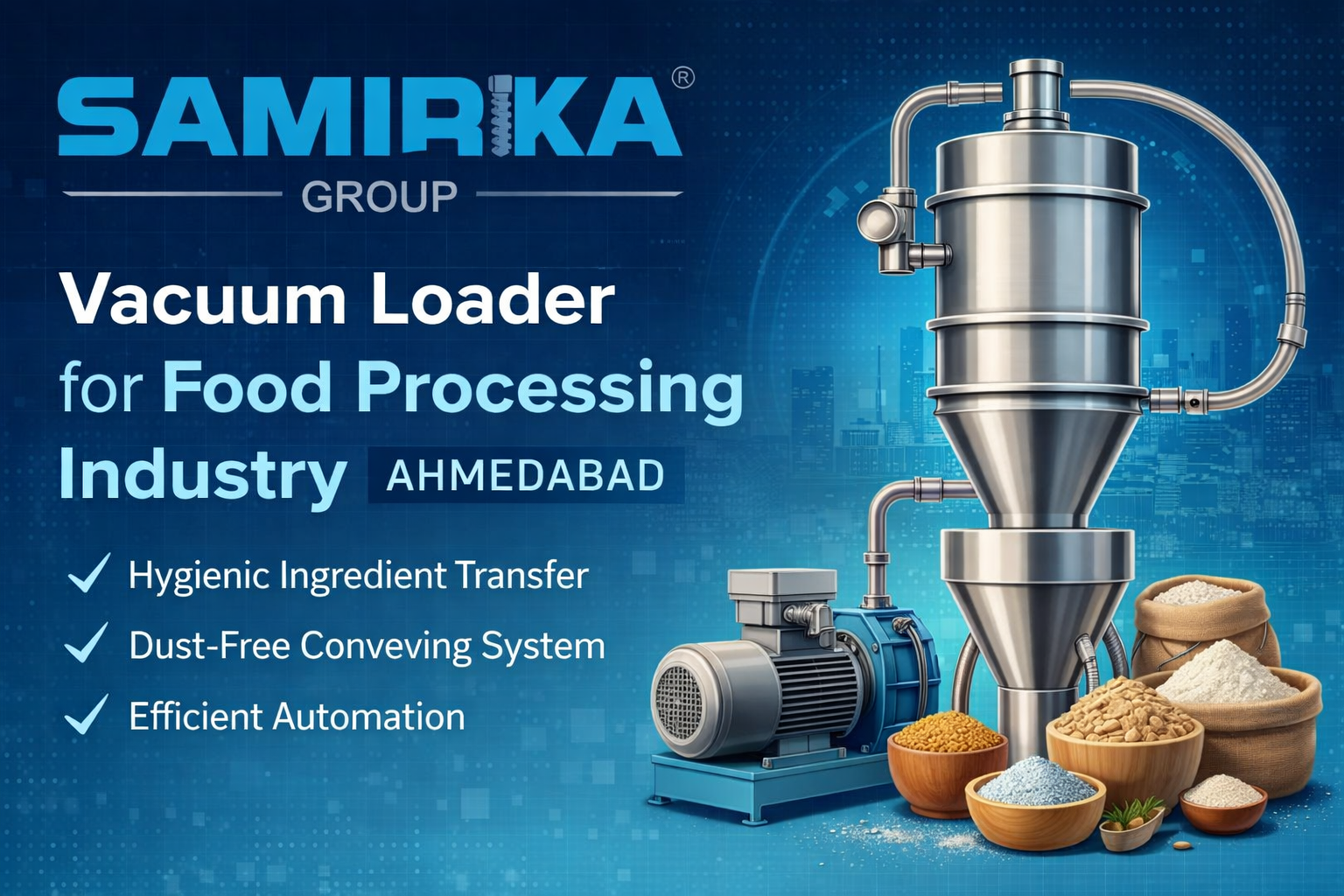
Modern food processing facilities require efficient, hygienic, and controlled material handling systems to maintain product quality and operational consistency. A vacuum loader for the food processing industry in Ahmedabad plays an important role in transporting ingredients such as powders, granules, and pellets from one process stage to another without contamination or material loss.
Food manufacturing environments demand strict hygiene standards and dust-free operations. Vacuum conveying technology supports these requirements by moving ingredients through sealed pipelines using controlled suction generated by vacuum pumps. This method eliminates open handling of materials and reduces the risk of contamination, making it suitable for sensitive food processing applications.
Industrial food plants across Ahmedabad and Gujarat are increasingly adopting vacuum loader systems to automate ingredient transfer between mixing, batching, blending, and packaging operations. These systems help streamline production processes while maintaining product integrity and consistent material flow.
A vacuum loader system is a type of pneumatic conveying technology that transports bulk materials through pipelines using negative pressure. Instead of pushing materials using compressed air, vacuum systems pull materials through a closed pipeline toward a receiver unit.
The system operates by creating a pressure difference between the material pickup point and the destination container. As air is removed from the pipeline by a vacuum pump, the resulting suction draws materials into the conveying line and moves them toward the receiver.
In food processing plants, vacuum loaders are commonly used to transfer ingredients from storage containers, bags, or intermediate bins to processing equipment such as mixers, feeders, or packaging machines. Because the system operates in an enclosed environment, it reduces exposure to environmental contaminants and supports cleaner production conditions.
Vacuum conveying systems are particularly effective for transporting powdered and granular ingredients used in food manufacturing, including flour, sugar, spices, starches, additives, and other dry food materials.
The working principle of a vacuum loader system is based on the creation of negative pressure within a sealed pipeline. This pressure difference enables materials to move smoothly through the conveying system from the source point to the destination receiver.
A typical vacuum conveying process involves the following operational sequence:
Once the material reaches the receiver, it is discharged into a hopper, silo, blender, or processing equipment for the next stage of production. The entire process is typically automated to maintain consistent flow and efficient material transfer.
This mechanism allows food manufacturers to move ingredients efficiently without relying on mechanical conveyors or manual handling.
A vacuum loader system consists of several integrated components that work together to ensure smooth and reliable material transfer.
The vacuum pump is the primary component responsible for generating suction within the conveying pipeline. It removes air from the system to create the pressure differential required for material movement.
The pipeline forms the closed path through which materials travel from the pickup point to the receiver. These pipelines are typically manufactured from stainless steel or other food-grade materials suitable for hygienic applications.
The receiver collects conveyed materials at the destination point. It separates the transported materials from the air stream and directs them into storage containers or processing equipment.
Filtration units remove fine dust particles from the airflow before releasing air from the system. This helps maintain product purity and ensures clean operating conditions in food processing environments.
Automation systems regulate suction pressure, material flow, and discharge cycles. Sensors and monitoring devices help maintain stable operation and detect abnormalities in the conveying process.
Vacuum conveying systems provide several operational benefits that make them suitable for food manufacturing environments.
These advantages make vacuum loader systems widely used in modern automated food processing plants.
Food manufacturing facilities require reliable systems for transporting ingredients between different stages of production. Vacuum loader systems support these operations by enabling controlled material transfer while maintaining hygiene standards.
Vacuum conveying systems are commonly used in several food processing applications.
Vacuum loaders transport raw materials such as flour, starch, sugar, and powdered ingredients from storage containers to mixers or blending machines.
Ingredients required for specific formulations are conveyed directly into batch mixers or processing vessels for controlled blending.
In packaging facilities, vacuum loaders supply powders or granules to filling machines that package products into pouches, containers, or bulk bags.
Fine powders and spices can be transported safely without dust release, helping preserve both product quality and workplace safety.
Vacuum loaders assist in handling seasonings, additives, and powdered ingredients used in processed food production lines.
Ahmedabad has become an important industrial center for food processing, packaging, and manufacturing industries in Gujarat. With increasing demand for packaged foods, ready-to-eat products, and processed ingredients, manufacturers are focusing on improving efficiency and hygiene within their production facilities.
Vacuum loader systems support this transition toward automated and hygienic manufacturing by enabling dust-free material transfer and reducing manual handling. Food processing plants in Ahmedabad benefit from these systems by maintaining consistent product quality while optimizing production workflows.
The growing emphasis on food safety regulations and hygienic plant operations has further increased the adoption of vacuum conveying technology across food manufacturing facilities in the region.
Selecting the appropriate vacuum conveying system depends on several operational and material-handling considerations within the processing facility.
Material Characteristics
The particle size, density, and flow behavior of the material influence the conveying design and suction capacity required for efficient transport.
Conveying Distance
The distance between pickup and discharge points affects pipeline design, vacuum strength, and overall system configuration.
Material Throughput
Production requirements determine the conveying capacity needed to maintain a consistent supply of materials to processing equipment.
Plant Layout
The physical layout of the processing facility influences pipeline routing and system integration with existing machines.
Hygiene and Cleaning Requirements
Food processing equipment must support easy cleaning and maintenance to maintain hygienic operating conditions.
Considering these factors helps ensure the selected system operates efficiently and integrates smoothly with the production process.
Automation and hygienic processing are becoming increasingly important in the global food manufacturing industry. Technologies such as vacuum conveying systems help manufacturers improve production efficiency while maintaining strict hygiene standards.
Advanced monitoring systems, automated controls, and improved filtration technologies are further enhancing the performance of vacuum loader systems. These developments allow food manufacturers to achieve greater operational reliability and improved product safety.
As food processing facilities continue to modernize, vacuum conveying systems are expected to remain an essential component of automated ingredient handling and material transfer processes.
A vacuum loader is a material handling system that uses negative pressure to transport powders, granules, or pellets through a closed pipeline from one location to another within a food processing plant. It enables hygienic and dust-free ingredient transfer.
A vacuum conveying system works by creating suction using a vacuum pump. This suction pulls materials through a sealed pipeline toward a receiver unit, where the materials are separated from the airflow and discharged into processing equipment.
Vacuum loaders can handle a variety of dry bulk materials including powders, granules, pellets, and food ingredients such as flour, sugar, spices, additives, starch, and other powdered materials used in food processing.
Vacuum conveying systems are used in food manufacturing because they provide enclosed, dust-free material transfer. This helps maintain hygiene standards, reduce contamination risks, and improve operational efficiency in food processing plants.
Vacuum loader systems are used across multiple industries including food processing, pharmaceuticals, chemicals, plastics, cosmetics, and packaging where controlled handling of powders and bulk materials is required.
Yes, vacuum loader systems can be integrated with automated production equipment such as mixers, feeders, packaging machines, and storage silos. Automation controls allow the system to operate continuously with minimal manual intervention.
Filter Using Product Tags