Get Your Free Quote…!
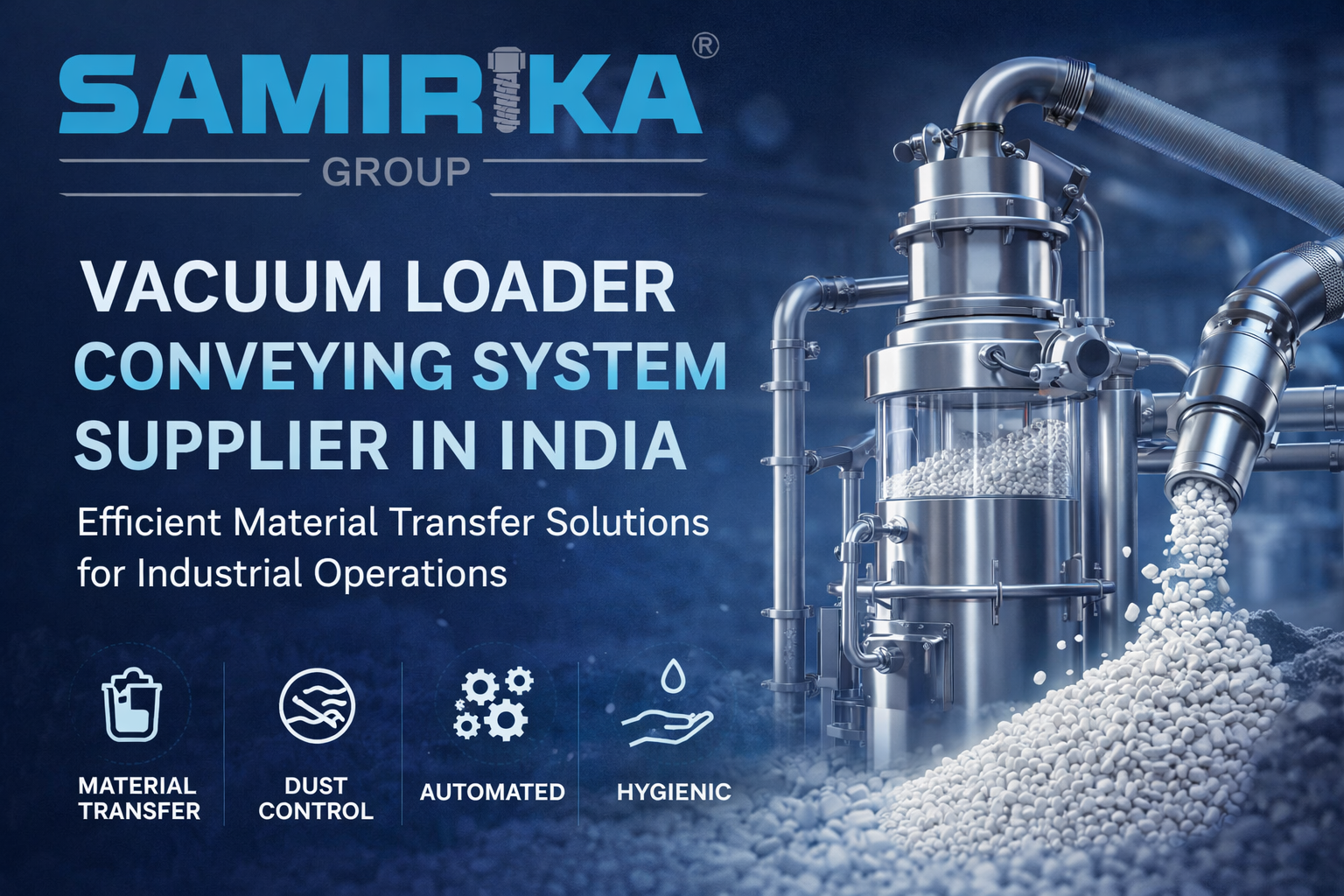
Efficient material handling plays a critical role in modern industrial production systems. Manufacturing processes that involve powders, granules, pellets, and bulk solids require reliable transfer systems that ensure materials move safely and consistently between different stages of production.
Industries across India are increasingly adopting automated conveying technologies to improve operational efficiency, maintain cleanliness, and reduce manual material handling.
A vacuum loader conveying system supplier in India provides industrial solutions designed to transport materials through enclosed pipelines using controlled vacuum pressure. These systems enable industries to move materials efficiently while minimizing contamination risks, dust emissions, and product loss. As production facilities become more automated and quality-focused, vacuum conveying systems have become an essential component of modern industrial operations.
Industrial hubs across India, including major manufacturing regions, rely on dependable material transfer technologies to maintain consistent production flow. Vacuum loader conveying systems support industries that require clean, controlled, and efficient movement of materials within their facilities.
A vacuum loader conveying system is an industrial material handling technology designed to transport powders, granules, pellets, and bulk solids through pipelines using vacuum pressure. The system operates by creating a pressure difference between the source point and the destination point, allowing materials to move safely through enclosed pipelines.
Unlike traditional mechanical conveyors that rely on belts, screws, or chains, vacuum conveying systems use suction generated by vacuum pumps to transfer materials. This method allows efficient movement while maintaining a closed environment that protects both the material and the surrounding workspace.
The system typically functions through a coordinated set of components that work together to ensure controlled material movement. Vacuum pumps generate the suction force required to create negative pressure within the pipeline. The conveying pipeline serves as the pathway through which materials travel. Material receivers collect and store the conveyed materials at the destination point. Filters and separators remove dust or fine particles before the material reaches its final location.
This technology is widely used in industries where material cleanliness, dust control, and precise handling are essential for maintaining product quality and process reliability.
Industrial material handling systems often use either vacuum conveying systems or pneumatic conveying systems depending on operational requirements. While both technologies rely on air movement to transport materials, their working principles and applications differ.
A vacuum conveying system operates using negative pressure created by a vacuum pump. Materials are pulled through the pipeline toward the receiving point. Because the system works under vacuum conditions, it offers better containment and dust control, making it suitable for industries that require hygienic and contamination-free material handling.
A pneumatic conveying system, in contrast, uses positive pressure generated by compressed air or gas. In this system, materials are pushed through pipelines using high-velocity air streams. Pneumatic conveying systems are commonly used for handling larger volumes of bulk materials across longer distances.
The choice between vacuum and pneumatic conveying systems depends on factors such as material characteristics, production capacity, conveying distance, and plant layout. Many industries prefer vacuum loader conveying systems when cleanliness, process control, and dust containment are key priorities.
A vacuum loader conveying system consists of several integrated components that ensure smooth material transfer within industrial environments.
Each component contributes to the safe, efficient, and reliable operation of the conveying system, ensuring uninterrupted material movement throughout production processes.
Vacuum loader conveying systems offer several operational advantages that make them suitable for a wide range of industrial applications.
These features help industries improve operational reliability while maintaining product integrity during material transfer.
Vacuum conveying technology is widely used across industries that require controlled handling of powders and granular materials. The ability to transfer materials without contamination or dust generation makes these systems suitable for diverse production environments.
These applications demonstrate the versatility of vacuum conveying systems across industrial sectors where controlled material handling is essential.
Industrial manufacturers are increasingly adopting automated conveying systems to improve productivity and operational safety. Vacuum conveying technology offers several advantages that make it well suited for modern manufacturing environments.
One of the primary benefits is dust-free material transfer. Because the system operates within a sealed pipeline network, it prevents dust emissions and contamination. This capability is particularly important in industries such as pharmaceuticals, food processing, and chemical manufacturing where product purity is critical.
Another key advantage is compatibility with automation. Vacuum loader conveying systems can be integrated with automated production lines, enabling synchronized material feeding between different processing stages. This reduces manual handling while improving production efficiency.
The system also offers flexibility in plant layout. Materials can be transported vertically, horizontally, or across complex production layouts without requiring large conveyor structures. This flexibility allows manufacturers to optimize factory space and streamline production workflows. Additionally, vacuum conveying systems support precise material control, helping maintain consistent product quality across manufacturing processes.
India's manufacturing sector continues to expand across industries such as chemicals, plastics, food processing, pharmaceuticals, and specialty materials. As production volumes grow, industries require efficient and automated systems for transferring materials within their facilities.
A vacuum loader conveying system supplier in India plays an important role in supporting these industrial requirements. Manufacturers depend on advanced conveying systems to maintain smooth production flow, reduce operational downtime, and ensure safe material handling practices.
Industrial regions across India have seen increasing adoption of automated material handling technologies. Vacuum conveying systems help industries maintain clean production environments while improving operational efficiency. The technology also supports regulatory compliance in sectors that require strict hygiene and safety standards. With the continued expansion of industrial automation, the demand for reliable vacuum conveying solutions is expected to grow steadily in the coming years.
Choosing the right vacuum conveying system requires careful evaluation of several technical and operational factors. Industrial buyers typically assess system capabilities based on the nature of the materials being transported and the specific requirements of the production process.
Evaluating these factors helps industries select vacuum conveying systems that align with their operational requirements and long-term production goals.
Maintaining a vacuum loader conveying system involves regular inspection of system components to ensure consistent performance. Routine maintenance activities typically include filter cleaning, pipeline inspection, and monitoring of vacuum pressure levels.
Industrial systems are designed with accessible components that allow operators to inspect and maintain equipment without interrupting production processes. Monitoring systems such as pressure sensors and alarms help detect potential issues early, reducing the risk of operational downtime. Proper maintenance practices contribute to the long-term reliability of the system while ensuring consistent material transfer within production facilities.
Efficient material handling systems are essential for maintaining smooth industrial production processes. Vacuum loader conveying systems provide a reliable method for transporting powders, granules, and bulk materials within manufacturing facilities while ensuring cleanliness, safety, and operational efficiency.
A vacuum loader conveying system supplier in India supports industries that require controlled material transfer technologies. These systems enable manufacturers to automate material handling operations, reduce contamination risks, and improve overall production efficiency.
As industrial automation continues to expand, vacuum conveying technology will remain an important component of modern manufacturing infrastructure. Industries that rely on efficient material transfer systems benefit from improved production control, enhanced workplace cleanliness, and streamlined manufacturing operations.
Filter Using Product Tags