Get Your Free Quote…!
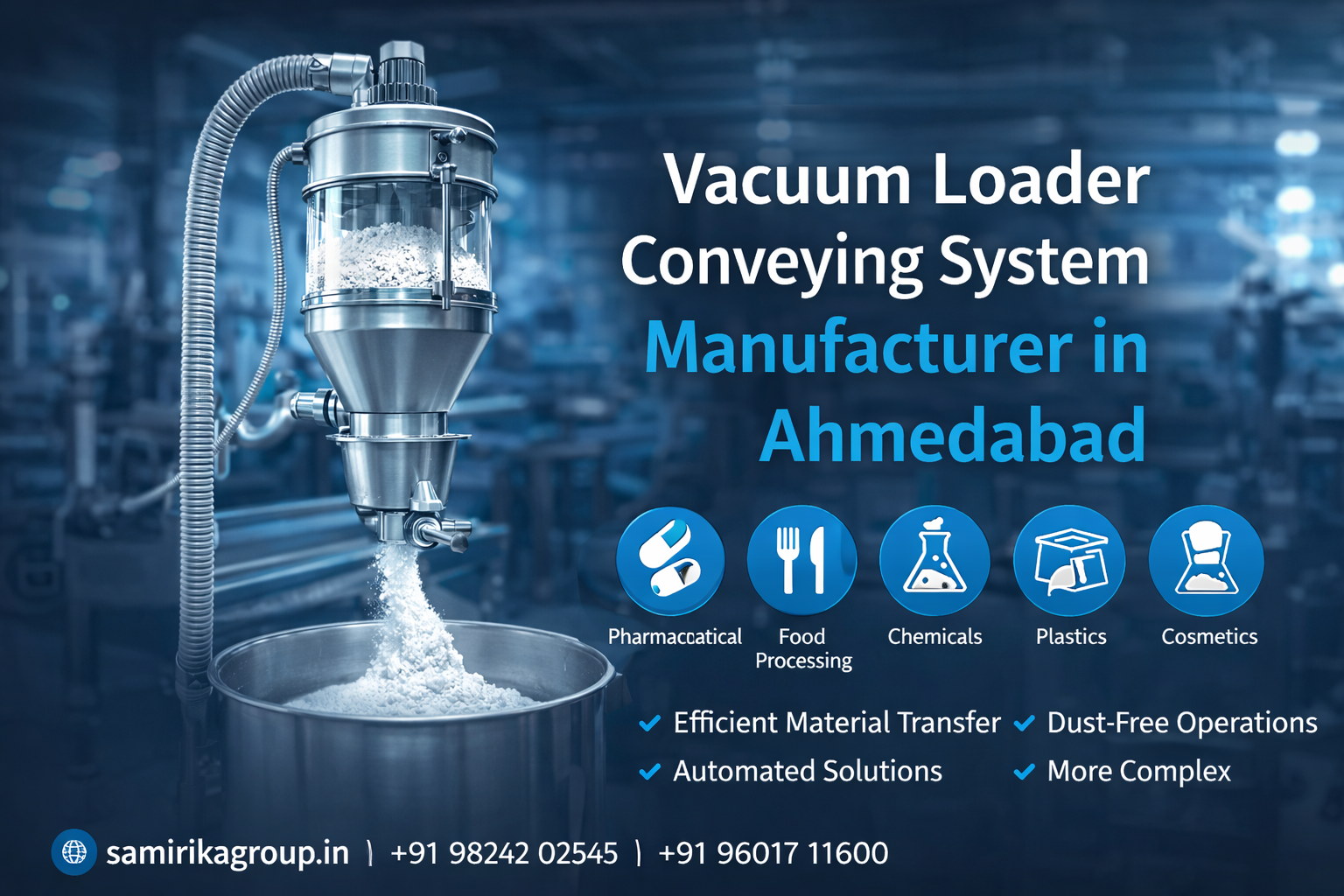
Industrial manufacturing processes rely heavily on efficient material handling systems to maintain consistent production flow and reduce manual handling. In many industries, powders, granules, pellets, and bulk materials must be transported safely and efficiently between processing units. A vacuum loader conveying system manufacturer in Ahmedabad provides advanced conveying solutions that enable industries to move materials through pipelines using controlled vacuum pressure.
Material transfer systems are an essential part of modern automated production facilities. Instead of relying on manual handling or conventional conveyor systems, vacuum conveying technology enables materials to be transferred quickly while maintaining cleanliness and minimizing contamination risks. Industries operating in industrial hubs such as Ahmedabad increasingly depend on these systems to support process efficiency and maintain reliable production operations.
Vacuum loader conveying systems are particularly suitable for industries where dust control, hygiene, and contamination prevention are critical. By creating negative pressure within a closed pipeline system, these conveying systems move materials safely from one processing point to another without exposure to the external environment.
A vacuum loader conveying system is an industrial material handling technology designed to transport bulk materials using suction created by a vacuum pump. Unlike traditional mechanical conveyors that rely on belts or screw mechanisms, vacuum conveying systems move materials through pipelines using controlled air pressure differentials.
The working principle is based on creating a low-pressure environment inside the conveying line. Materials are drawn into the pipeline and transported toward the receiving container, hopper, or processing equipment.
The basic operational process involves several steps:
This process enables continuous, efficient, and controlled transfer of materials while maintaining clean and enclosed operations.
A typical vacuum loader conveying system consists of several essential components that work together to ensure reliable material transport. Each component plays a specific role in maintaining stable suction, airflow control, and material separation.
The most important components include the vacuum pump, conveying pipeline, material receiver, and filtration system.
The vacuum pump generates the suction force required for conveying. It removes air from the pipeline to create a pressure difference between the source and destination points. This pressure differential allows materials to move smoothly through the system.
The conveying pipeline acts as a sealed and airtight pathway that enables materials to travel without leakage. Depending on the application, pipelines may be constructed from stainless steel, carbon steel, or other specialized materials designed to handle sensitive powders or corrosive substances.
The material receiver serves as the collection point where conveyed materials are separated from the airflow and discharged into the next stage of processing. Receivers are typically connected to hoppers, mixers, packaging machines, or storage silos.
Filters and separators are installed to remove fine dust particles and prevent contaminants from entering the vacuum pump. These filtration systems help maintain operational cleanliness and protect equipment from wear and damage.
Both vacuum conveying and pneumatic conveying systems are widely used for industrial material transport. While they operate on similar airflow principles, their operational methods differ depending on pressure conditions.
A vacuum conveying system operates under negative pressure. Materials are pulled through the pipeline using suction generated by a vacuum pump. This makes vacuum systems particularly suitable for smaller batch transfers, hygienic applications, and controlled material handling environments.
A pneumatic conveying system, in contrast, operates using positive pressure created by compressed air. In this approach, materials are pushed through the pipeline at high velocity using an air compressor. Pneumatic systems are often used in industries where large volumes of material must be transported over longer distances.
The choice between vacuum conveying and pneumatic conveying depends on factors such as material characteristics, conveying distance, capacity requirements, and specific process conditions.
Vacuum loader conveying systems are widely used across many industries where controlled and dust-free material transport is required. These systems help maintain operational efficiency while ensuring cleanliness and contamination control.
Common industrial applications include:
Because the systems operate through enclosed pipelines, they are particularly suitable for industries where dust containment and hygiene are critical operational requirements.
Modern manufacturing environments focus strongly on automation, efficiency, and process reliability. Vacuum conveying technology supports these objectives by reducing manual intervention and enabling automated material handling systems.
Factories with multiple production stages often require raw materials to move between processing equipment such as mixers, reactors, packaging machines, and storage units. Vacuum conveying systems provide a dependable way to automate these material movements without interrupting production flow.
Automation systems can also be integrated with vacuum loaders to allow programmable operation. Sensors, pressure monitoring devices, and automated controls allow manufacturers to regulate airflow, detect material levels, and maintain consistent conveying performance.
This level of automation enhances operational safety while ensuring a consistent supply of materials to production equipment.
Vacuum conveying systems provide several operational advantages that make them suitable for modern manufacturing facilities. Their enclosed design and automated operation help industries improve process efficiency while maintaining product quality.
Key operational advantages include:
These advantages help industries streamline production workflows while maintaining high standards of cleanliness and operational control.
Ahmedabad is one of Gujarat's major industrial centers, hosting a large number of manufacturing facilities across sectors such as chemicals, pharmaceuticals, plastics, food processing, and engineering. As industrial automation expands across these industries, the demand for advanced material handling systems continues to grow.
Manufacturing zones such as Vatva GIDC, Naroda GIDC, Odhav, Kathwada, and Changodar contain many production units that rely on efficient bulk material transport systems. Vacuum loader conveying systems help these industries maintain continuous production by enabling smooth transfer of raw materials and intermediate products.
With increasing emphasis on clean manufacturing practices, many facilities are adopting vacuum conveying systems to reduce dust emissions, improve workplace safety, and comply with environmental standards.
Choosing the appropriate vacuum conveying system depends on several factors related to material characteristics and process requirements. Industries must evaluate parameters such as material type, conveying distance, required capacity, and plant layout before selecting a suitable system.
Material properties play an important role in determining system design. Powders with fine particle sizes require efficient filtration systems, while heavier granules or pellets may require higher suction capacity.
Plant layout is another important factor. The conveying system must integrate effectively with existing equipment such as mixers, silos, packaging machines, or reactors. Customizing the system often ensures that the conveying pipeline aligns smoothly with the facility's operational workflow.
System reliability and maintenance accessibility are also critical considerations, especially for industries operating continuous production cycles.
Industrial automation is continuously transforming the way materials are handled within manufacturing environments. As production processes become more advanced and efficiency-driven, modern conveying technologies are becoming increasingly important.
Vacuum conveying systems represent a significant step toward fully automated production environments. Their ability to integrate with sensors, programmable logic controllers, and automated packaging systems allows factories to maintain consistent production flow.
Future developments in material handling technology are expected to include smarter monitoring systems, energy-efficient vacuum pumps, and improved filtration technologies. These advancements will further enhance the efficiency and reliability of vacuum loader conveying systems across industries.
A vacuum loader conveying system is an industrial material handling system designed to transport powders, granules, and bulk materials through pipelines using suction generated by a vacuum pump. The system moves materials from one processing point to another within a controlled and enclosed environment.
A vacuum conveying system works by creating negative pressure inside a pipeline using a vacuum pump. This pressure difference pulls materials through the pipeline toward a receiving hopper or storage container, while filters separate the conveyed materials from the airflow.
Vacuum loader systems can handle a wide range of materials including powders, granules, pellets, plastic resins, chemical powders, food ingredients, and pharmaceutical materials. The system design can be adapted depending on material characteristics and handling requirements.
Vacuum conveying systems are commonly used in industries such as pharmaceuticals, food processing, chemical manufacturing, plastics processing, cosmetics production, packaging plants, and ceramic manufacturing where dust-free material transfer is essential.
Vacuum conveying systems transport materials using negative pressure generated by a vacuum pump, whereas pneumatic conveying systems use compressed air to push materials through pipelines under positive pressure. The selection depends on application requirements and conveying distances.
Manufacturing plants use vacuum loader conveying systems to automate the transfer of materials between processing stages. These systems improve operational efficiency, reduce manual handling, maintain cleanliness, and ensure consistent supply of raw materials to production equipment.
Vacuum conveying systems operate through sealed pipelines, preventing materials from being exposed to the external environment. This enclosed design helps reduce contamination risks and maintain hygienic conditions in industries such as food processing and pharmaceuticals.
Efficient material handling systems are essential for maintaining smooth industrial operations. Vacuum loader conveying systems provide a reliable solution for transporting powders, granules, and bulk materials within manufacturing facilities while ensuring cleanliness and operational efficiency.
As industries continue to adopt automation and advanced manufacturing technologies, vacuum conveying systems are playing an increasingly important role in improving productivity and maintaining process control. Their ability to provide dust-free, automated, and flexible material transport makes them an important component of modern industrial infrastructure.
Filter Using Product Tags