Get Your Free Quote…!

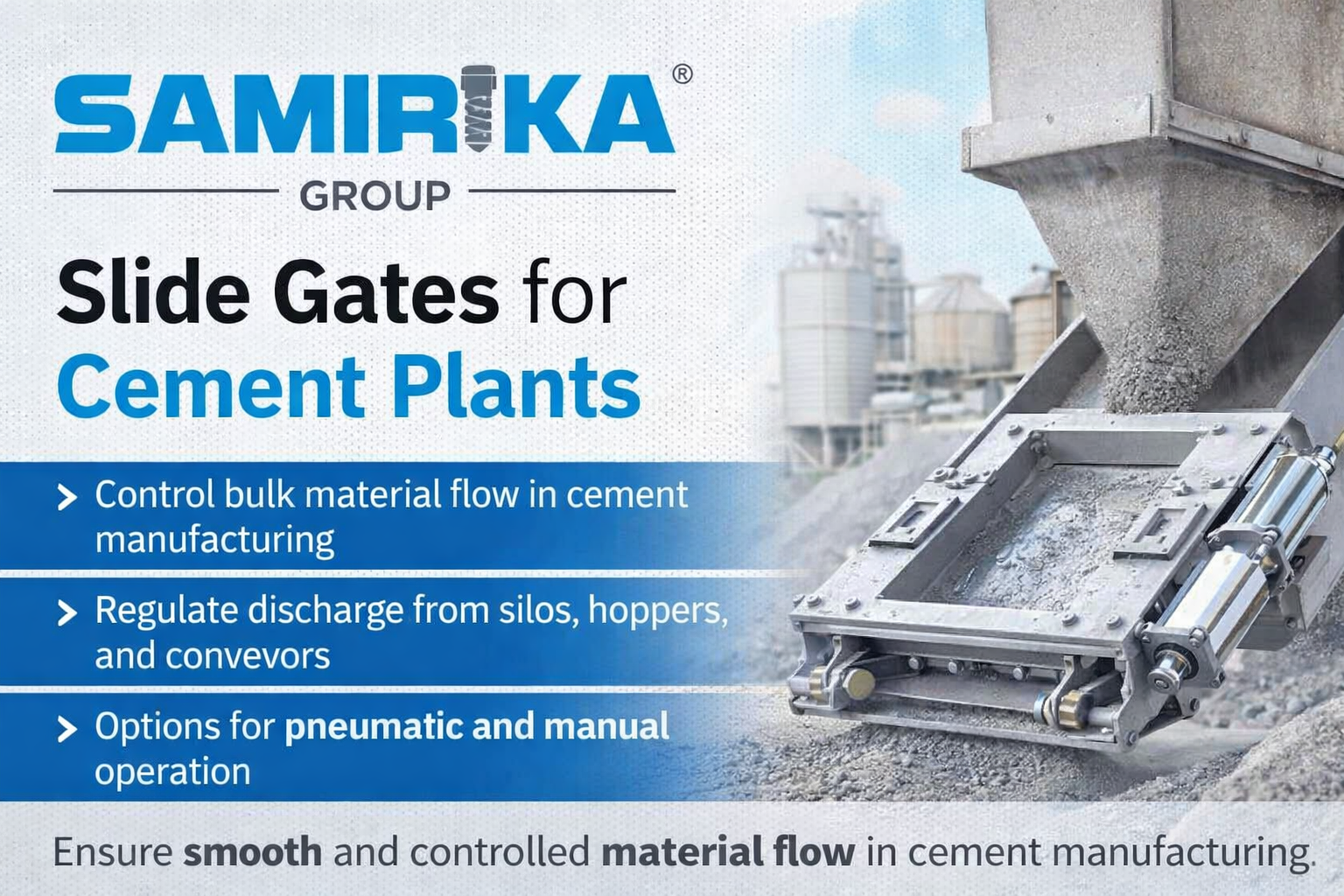
Cement manufacturing operations rely on efficient bulk material handling systems to move large volumes of raw materials and processed products through different stages of production. In these environments, controlling the flow of materials such as limestone powder, clinker dust, cement powder, fly ash, and other granular substances is essential for maintaining stable and efficient production processes. A slide gate for cement plants plays a critical role in managing this material movement by allowing operators to regulate, stop, or release material flow between storage units and processing equipment.
In modern cement plants, materials pass through multiple stages including crushing, grinding, storage, conveying, batching, and packaging. At each stage, it becomes necessary to isolate or regulate material flow to maintain process efficiency and prevent operational disruptions. Slide gates are commonly installed at the discharge points of silos, hoppers, bins, conveyors, and feeders where accurate material control is required.
The design of slide gates enables industries to handle bulk materials efficiently while supporting smooth plant operations. Since cement production facilities operate continuously under heavy load conditions, these gates are engineered to withstand abrasive materials, high dust concentrations, and demanding industrial environments.
A slide gate is a mechanical device designed to control the movement of bulk materials within industrial material handling systems. It typically consists of a sliding blade or plate that moves across an opening in a hopper, silo, chute, or pipeline. By adjusting the position of the sliding blade, the flow of materials can be completely shut off, partially regulated, or fully released.
In cement plants, slide gates are positioned strategically throughout the material handling system. They are often installed between storage units and conveying equipment to ensure that materials move only when required within the production process. This controlled flow helps prevent blockages, equipment overload, and uneven material distribution.
Slide gates also play an important role during maintenance operations. When equipment such as conveyors, rotary feeders, or screw conveyors requires servicing, slide gates allow specific sections of the system to be isolated without interrupting the entire production line.
Industrial environments that handle cement powder or clinker dust require robust equipment capable of operating reliably under abrasive conditions. For this reason, slide gates are typically constructed using durable materials such as heavy-duty steel or stainless steel to support continuous industrial operation.
Different types of slide gates are used depending on the level of automation, operational requirements, and overall system design within the cement plant. Two commonly used types are pneumatic slide gates and manual slide gates.
Pneumatic slide gates operate using compressed air systems. These gates are connected to pneumatic cylinders that move the gate blade automatically when air pressure is applied. Pneumatic operation allows integration with plant automation systems, enabling remote control and quick response during production processes.
Manual slide gates operate through mechanical handles, wheels, or lever mechanisms that allow plant operators to move the gate blade manually. These gates are generally used in areas where automated control is not necessary or where occasional manual operation is sufficient.
Both pneumatic and manual slide gates serve the same fundamental purpose of regulating material flow. The selection between them typically depends on the level of plant automation, operational requirements, and maintenance considerations.
Material flow control is essential for maintaining balance between the various stages of cement production. Without effective control systems, materials may accumulate in conveyors, overflow from hoppers, or move unevenly through the processing line.
Slide gates help regulate the discharge of materials from storage units into conveying systems. By controlling the opening of the sliding blade, operators can manage the rate at which materials enter downstream equipment. This helps maintain consistent feeding rates and improves the efficiency of the entire production line.
Another advantage of slide gates is their ability to isolate sections of the material handling system. During maintenance or equipment replacement, slide gates can block material flow, allowing technicians to perform maintenance safely without the risk of unexpected material discharge.
Because cement plants handle large quantities of fine powders and abrasive particles, equipment durability is particularly important. Properly designed slide gates help reduce material leakage, minimize dust release, and maintain the integrity of the material handling system.
Industrial slide gates used in cement production systems are designed to operate reliably in harsh environments and under heavy-duty material flow conditions. These gates typically incorporate several structural and operational features that improve reliability and long-term performance.
These features allow slide gates to function effectively in demanding cement manufacturing environments while supporting uninterrupted material handling processes.
Slide gates are widely used throughout cement plants where bulk materials must be transferred between storage units and processing equipment. Their ability to regulate and isolate material flow makes them an essential component in multiple stages of cement production.
Common applications include:
These applications demonstrate how slide gates contribute to efficient production processes by ensuring controlled and predictable material movement throughout the plant.
Cement plants operate high-capacity production lines that run continuously for extended periods. Any disruption in the flow of materials can affect production output, increase operational costs, and lead to equipment downtime.
Reliable slide gates help maintain stable plant operations by ensuring that materials are transferred smoothly between different processing stages. Their ability to isolate equipment sections also simplifies maintenance procedures and reduces the risk of production interruptions.
In addition, properly designed slide gates improve plant safety by preventing uncontrolled material discharge. When large volumes of bulk materials are handled within enclosed systems, controlled discharge points are essential for maintaining safe working conditions.
As cement plants increasingly adopt automated systems and advanced material handling technologies, slide gates remain a fundamental mechanical component that supports efficient plant operation.
Regular maintenance is necessary to ensure the long-term performance of slide gates in cement manufacturing environments. Because these gates operate in dusty conditions and handle abrasive materials, routine inspections help identify wear or mechanical issues before they affect plant operations.
Maintenance typically includes checking the alignment of the sliding blade, inspecting sealing surfaces for wear, and ensuring that actuation systems function smoothly. Pneumatic slide gates may also require inspection of air cylinders, pressure lines, and control components to maintain reliable automated operation.
Proper lubrication of mechanical components helps reduce friction and ensures smooth gate movement. By following consistent maintenance practices, cement plants can extend the service life of slide gates while maintaining efficient material handling operations.
As cement manufacturing continues to evolve with improved automation and material handling technologies, the demand for reliable flow control equipment remains essential. Slide gates will continue to play a key role in managing bulk material movement within industrial production systems.
Modern designs increasingly focus on improved sealing systems, wear-resistant materials, and compatibility with automated control systems. These improvements allow slide gates to operate more efficiently while supporting the growing complexity of modern cement plants.
With the expansion of industrial infrastructure and construction projects worldwide, cement production facilities require dependable equipment to maintain consistent output. Slide gates provide a practical solution for controlling material flow while ensuring operational stability in large-scale cement manufacturing systems.
A slide gate in cement plants is used to control the flow of bulk materials such as cement powder, clinker, fly ash, or limestone. It regulates material movement between silos, hoppers, conveyors, and other processing equipment.
A pneumatic slide gate operates using compressed air that moves a cylinder connected to the sliding blade. When air pressure is applied, the blade moves to open or close the gate, allowing automated control of material flow.
Slide gates are commonly installed at the discharge points of silos, storage bins, hoppers, conveyors, and pneumatic conveying systems to regulate material movement and isolate equipment sections.
Industrial slide gates are typically manufactured from heavy-duty steel or stainless steel to withstand abrasive materials, dust exposure, and continuous operation in demanding industrial environments.
Pneumatic slide gates operate automatically using compressed air systems and can be integrated with plant automation controls, while manual slide gates are operated using mechanical handles or levers for direct operator control.
Slide gates regulate material discharge, prevent uncontrolled flow, allow equipment isolation during maintenance, and help maintain smooth production processes in industrial material handling systems.
Filter Using Product Tags