Get Your Free Quote…!

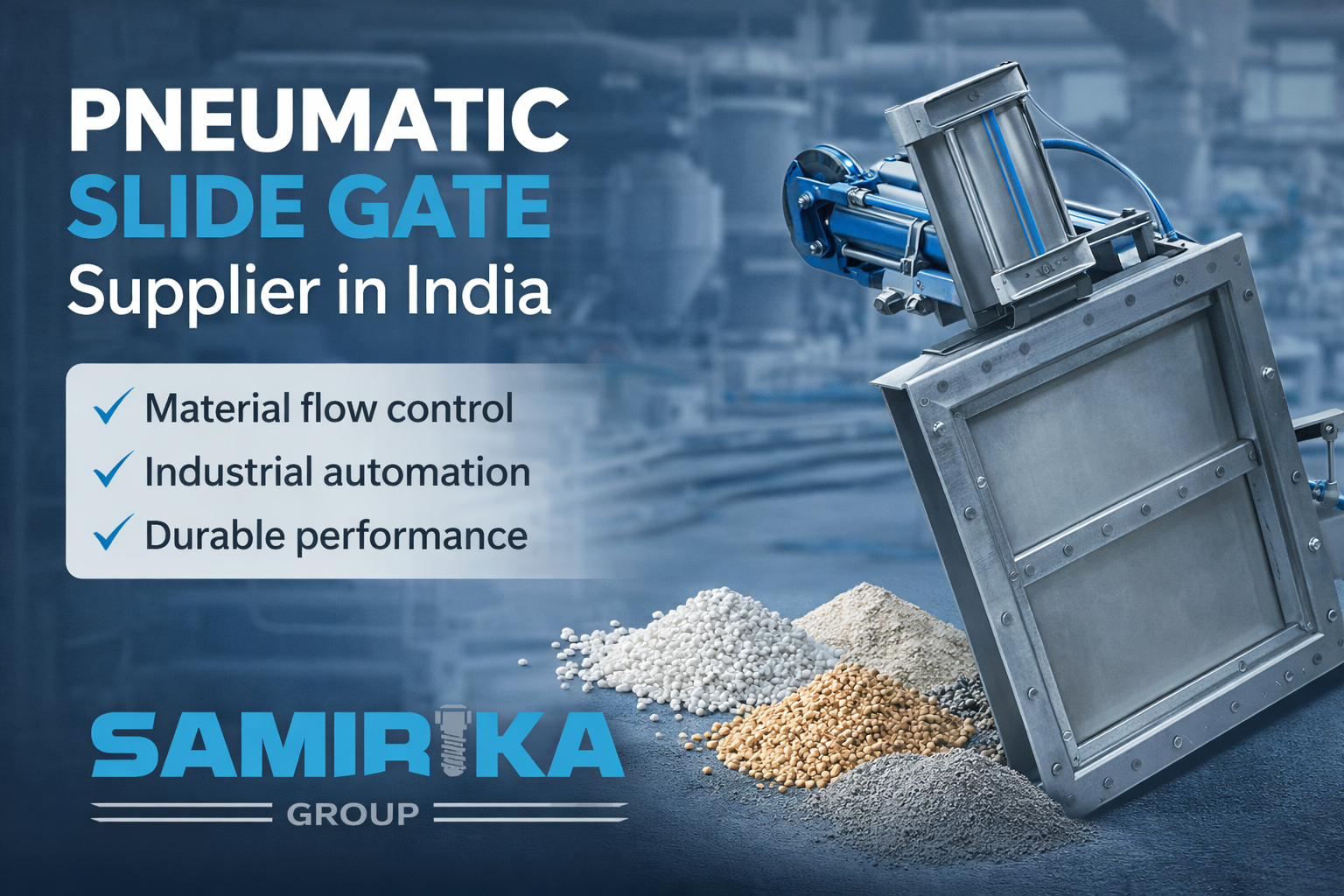
Industrial material handling systems require reliable mechanisms to control the movement of powders, granules, and bulk materials within processing lines. One widely used solution in such systems is the slide gate. A pneumatic slide gate supplier in India provides equipment designed to regulate the discharge and control of bulk materials across multiple industries, including manufacturing, agriculture, construction, and chemical processing.
Slide gates are mechanical devices that open or close pathways within material conveying systems. They are typically installed under silos, hoppers, bins, or conveyors to manage the controlled discharge of materials. In industrial environments where accurate flow control and operational efficiency are essential, pneumatic and manual slide gates function as important components of the overall material handling infrastructure.
Companies involved in industrial machinery and bulk handling equipment often integrate slide gates into automated and semi-automated systems to regulate product flow, maintain process efficiency, and support operational safety. These systems are commonly used in facilities that handle powdered materials, granules, pellets, aggregates, and other bulk solids.
Slide gates function as flow control devices installed within material transfer systems. Their primary role is to regulate or completely stop the passage of materials moving through ducts, chutes, hoppers, or conveying lines.
A pneumatic slide gate operates using compressed air to control the opening and closing mechanism. The system typically consists of a sliding blade connected to a pneumatic actuator or cylinder. When compressed air is supplied to the actuator, the blade moves and allows material to pass through the opening. When air pressure changes or is released, the blade slides back to close the passage.
Manual slide gates, in contrast, operate through direct human intervention. The gate blade is moved manually using a handle, lever, or wheel mechanism. These systems are simpler in design and are commonly used where automation is not required or where flow control is needed only occasionally.
Both gate types perform the same fundamental function of regulating bulk material flow. The choice between pneumatic and manual operation usually depends on factors such as the level of plant automation, operational frequency, safety requirements, and the overall scale of industrial processes.
Bulk material handling systems are widely used in industrial production and processing facilities. These systems transport materials such as powders, granules, grains, chemicals, minerals, and pellets through networks of equipment that include conveyors, silos, hoppers, and feeders.
Slide gates serve as important control points within these systems. By regulating the opening and closing of material pathways, they allow operators to manage flow direction, prevent overflow, and isolate sections of the process line when necessary.
In automated facilities, pneumatic slide gates are often integrated with programmable control systems to maintain synchronized operations between conveyors, feeders, and packaging equipment. In smaller installations or manual production environments, manual slide gates provide a straightforward and dependable solution for controlling material flow.
The effectiveness of a material handling system depends largely on how efficiently materials can be controlled and directed. Slide gates help maintain operational stability while reducing the risk of material loss or system blockage.
Industrial slide gates are typically designed with a strong frame structure and a sliding blade made from durable materials such as mild steel or stainless steel. The blade moves horizontally across the opening to either allow or restrict material flow.
Pneumatic systems include actuators connected to the blade mechanism. These actuators convert compressed air energy into mechanical motion, enabling automated control of gate movement. The system can also be connected to plant automation panels or control units for precise operational management.
Manual slide gates rely on mechanical leverage systems such as screw handles or sliding rods. These components allow operators to open or close the gate depending on process requirements.
The overall design focuses on durability, smooth operation, and resistance to wear caused by abrasive materials. Proper sealing and alignment of the gate blade are also essential to ensure minimal leakage when the gate is closed.
Pneumatic slide gates are widely used in industrial environments where automated flow control is required. Their integration with compressed air systems allows them to operate quickly and with precision.
Common industrial applications include:
In automated production lines, pneumatic gates help maintain process consistency by ensuring that materials are released at the correct time and in controlled quantities.
Manual slide gates are typically used in facilities where automation is not necessary or where flow control is performed occasionally. They are also common in locations where electrical or pneumatic systems may not be available.
Typical use cases include:
Industrial plants increasingly rely on automation to maintain operational efficiency. Pneumatic slide gates play an important role in these systems by enabling fast and accurate control of bulk materials.
Key operational advantages include:
Manual slide gates continue to be widely used because of their simplicity and reliability. They require minimal maintenance and can operate without power or compressed air systems.
Key practical advantages include:
Due to these characteristics, manual gates are commonly used in facilities where full automation is not required.
India's industrial sector includes a large number of manufacturing plants, chemical facilities, food processing units, and agricultural processing centers. Many of these operations rely on bulk material handling systems to transport powders, grains, pellets, and granular materials efficiently.
As industrial production continues to expand across sectors such as construction materials, fertilizers, plastics, and packaging, the demand for efficient material flow control equipment has increased. Pneumatic slide gate suppliers in India support this demand by providing flow control mechanisms used in automated and semi-automated material handling systems.
Industrial hubs such as Ahmedabad, Mumbai, Pune, Coimbatore, and Delhi host numerous manufacturing facilities that integrate slide gates into conveying systems, storage silos, and packaging lines. These gates help maintain controlled material discharge while supporting safe and efficient production processes.
Modern industrial facilities typically combine multiple equipment systems, including conveyors, loaders, packaging machines, and storage units. Slide gates operate as important control points within these interconnected systems.
For example, in pneumatic conveying systems, slide gates may be installed beneath storage silos to regulate the release of material into pipelines. In packaging lines, they help control the flow of powders or granules into weighing and filling machines.
When properly integrated with other industrial equipment, slide gates contribute to smoother production workflows and improved process reliability.
Like most industrial mechanical equipment, slide gates require periodic inspection and maintenance to ensure reliable performance. Routine checks generally focus on the alignment of the sliding blade, actuator performance in pneumatic systems, and wear caused by abrasive materials.
Industrial operators often monitor the movement of the gate blade to ensure that it opens and closes smoothly without obstruction. Proper lubrication of moving parts and regular inspection of seals help maintain long-term operational efficiency.
For pneumatic systems, maintaining stable compressed air pressure and ensuring actuator functionality are essential for dependable gate operation.
Slide gates are essential components in modern bulk material handling systems. Whether operated manually or through pneumatic automation, these devices help regulate the movement of materials across industrial processing lines.
Pneumatic slide gate suppliers in India support a wide range of industries by providing flow control equipment used in automated production systems, conveying networks, and storage facilities. Manual slide gates continue to serve applications where simple and reliable mechanical control is sufficient.
As industries continue to expand the use of automated material handling technologies, slide gate systems remain an important part of industrial infrastructure designed to ensure efficient, controlled, and safe material flow throughout manufacturing operations.
Filter Using Product Tags