Get Your Free Quote…!
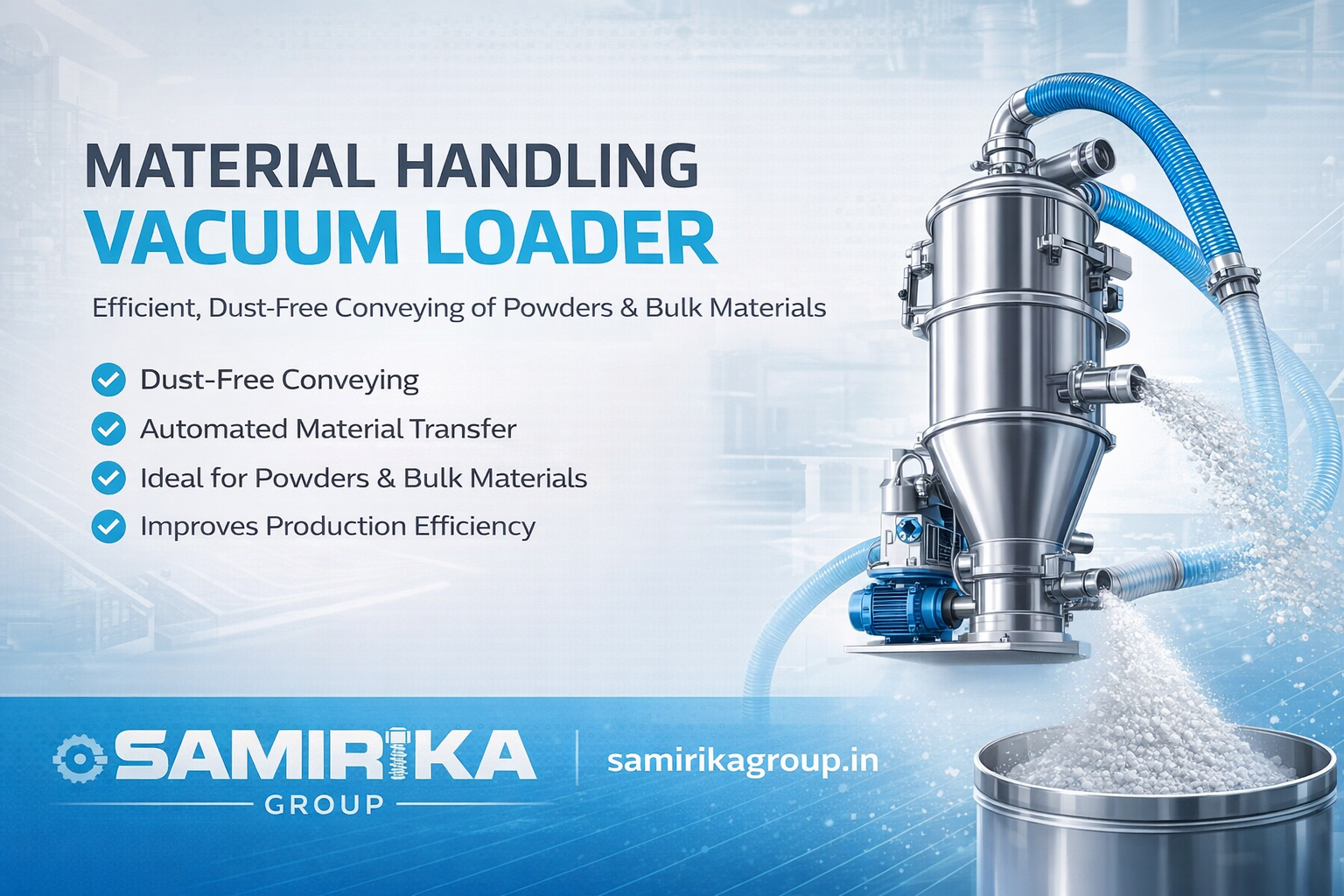
Material handling plays a critical role in modern industrial production, where powders, granules, pellets, and bulk solids must be transferred efficiently between different stages of manufacturing.
In industries such as plastics processing, food production, pharmaceuticals, chemicals, and packaging, maintaining cleanliness and product integrity during material transfer is essential. Traditional manual handling methods often lead to dust generation, contamination risks, and reduced operational efficiency.
A material handling vacuum loader is designed to address these challenges by providing a controlled and enclosed system for transporting bulk materials within industrial facilities. By using vacuum pressure to move materials through sealed pipelines, these systems enable safe, hygienic, and efficient material transfer without exposing materials to external contamination or product loss.
As industrial automation continues to advance, vacuum conveying technology has become a widely preferred solution for handling sensitive and high-value materials in manufacturing environments.
Industrial production lines depend heavily on efficient material movement between storage units, processing machines, mixers, packaging equipment, and filling systems. Without a reliable conveying mechanism, manufacturing productivity and process stability can be significantly affected. Vacuum conveying technology addresses this challenge by using negative pressure to draw materials through pipelines toward a designated receiver.
In a material handling vacuum loader system, air is removed from the conveying line to create a pressure difference. This pressure differential allows materials to move through the system from the source point to the destination point. The entire process takes place within a closed pipeline, which helps prevent dust leakage and minimizes the risk of contamination.
This method is particularly useful in industries where powders or fine particles must be transported without compromising hygiene, safety, or product quality. Because the material remains enclosed throughout the process, vacuum conveying systems are commonly used in facilities that must comply with strict cleanliness and process control standards.
A material handling vacuum loader operates on the principle of vacuum pressure and controlled airflow. The system creates suction within a sealed pipeline, allowing materials to be drawn into the conveying line and transported toward a receiving container or processing unit.
The operational process generally follows a structured sequence:
This controlled conveying method allows materials to move smoothly without excessive mechanical handling, reducing the likelihood of product degradation, dust formation, or contamination.
A vacuum conveying system consists of several integrated components that work together to ensure reliable and efficient material transfer. Each component plays an important role in maintaining stable airflow, safe operation, and consistent performance.
Vacuum conveying systems offer several operational advantages for industries that handle powders and bulk materials. Their ability to maintain enclosed material transport while improving process efficiency makes them widely used in automated production environments.
These advantages make vacuum loaders an important part of modern automated manufacturing systems where reliability and cleanliness are essential.
Material handling vacuum loaders are widely used across industries that require controlled and hygienic material transfer. Their ability to convey powders and granules without dust leakage makes them especially valuable in sensitive production environments.
Material handling systems often use either vacuum conveying or pneumatic conveying technologies depending on the application requirements. Although both systems use airflow to move materials, their operating methods differ.
The choice between these systems depends on factors such as material characteristics, conveying distance, plant layout, and overall production requirements.
Selecting an appropriate vacuum conveying system requires careful evaluation of operational parameters and material characteristics. Industries must assess their process requirements to ensure that the system performs efficiently within the production environment.
Important selection factors include:
Proper system design helps ensure that the vacuum loader operates efficiently without causing blockages, excessive wear, or material degradation.
To maintain reliable performance, vacuum conveying systems require routine inspection and preventive maintenance. Regular maintenance supports stable airflow, consistent system efficiency, and high product quality.
Common maintenance practices include checking filters, inspecting pipelines for leaks, monitoring vacuum pump performance, and verifying the proper functioning of sensors and control systems. Periodic cleaning of system components is also essential, particularly in industries where hygiene standards are critical.
Preventive maintenance not only extends system lifespan but also helps reduce the risk of unexpected production interruptions.
Industrial manufacturing continues to evolve with a growing emphasis on automation, process optimization, and operational efficiency. Vacuum conveying systems are becoming increasingly advanced through the integration of digital monitoring technologies and automated control systems.
Modern systems now incorporate smart sensors, automated control units, and real-time monitoring capabilities. These technologies enable operators to track system performance, maintain optimal airflow conditions, and identify potential issues before they disrupt production.
As industries continue adopting Industry 4.0 technologies, vacuum conveying solutions are expected to play an increasingly important role in automated material handling environments.
Material handling vacuum loader systems play an important role in modern industrial material transfer processes. By enabling enclosed, dust-free, and automated conveying of powders and bulk materials, these systems improve manufacturing efficiency while maintaining product quality and workplace cleanliness.
Their adaptability across various industries makes them a reliable solution for handling sensitive materials and supporting efficient industrial production workflows.
A material handling vacuum loader is used to transport powders, granules, pellets, and bulk materials within industrial processing systems. It enables controlled and dust-free transfer of materials between storage units, processing machines, and packaging equipment.
A vacuum loader works by creating negative pressure inside a sealed pipeline. This pressure difference pulls materials from the source point through the pipeline and delivers them to a receiving hopper or processing equipment.
Vacuum loaders can handle a wide range of materials including powders, granules, pellets, and small bulk solids. These systems are commonly used for plastics, food ingredients, chemicals, pharmaceutical powders, and similar materials.
Vacuum conveying systems are widely used in industries such as food processing, pharmaceuticals, plastics manufacturing, chemical processing, cosmetics production, and ceramics manufacturing.
Vacuum conveying uses negative pressure to pull materials through pipelines, while pneumatic conveying uses compressed air to push materials through pipelines under positive pressure.
Yes, regular maintenance is necessary to maintain system reliability. Typical maintenance tasks include inspecting filters, checking pipelines for leaks, monitoring vacuum pump performance, and cleaning system components.
Filter Using Product Tags