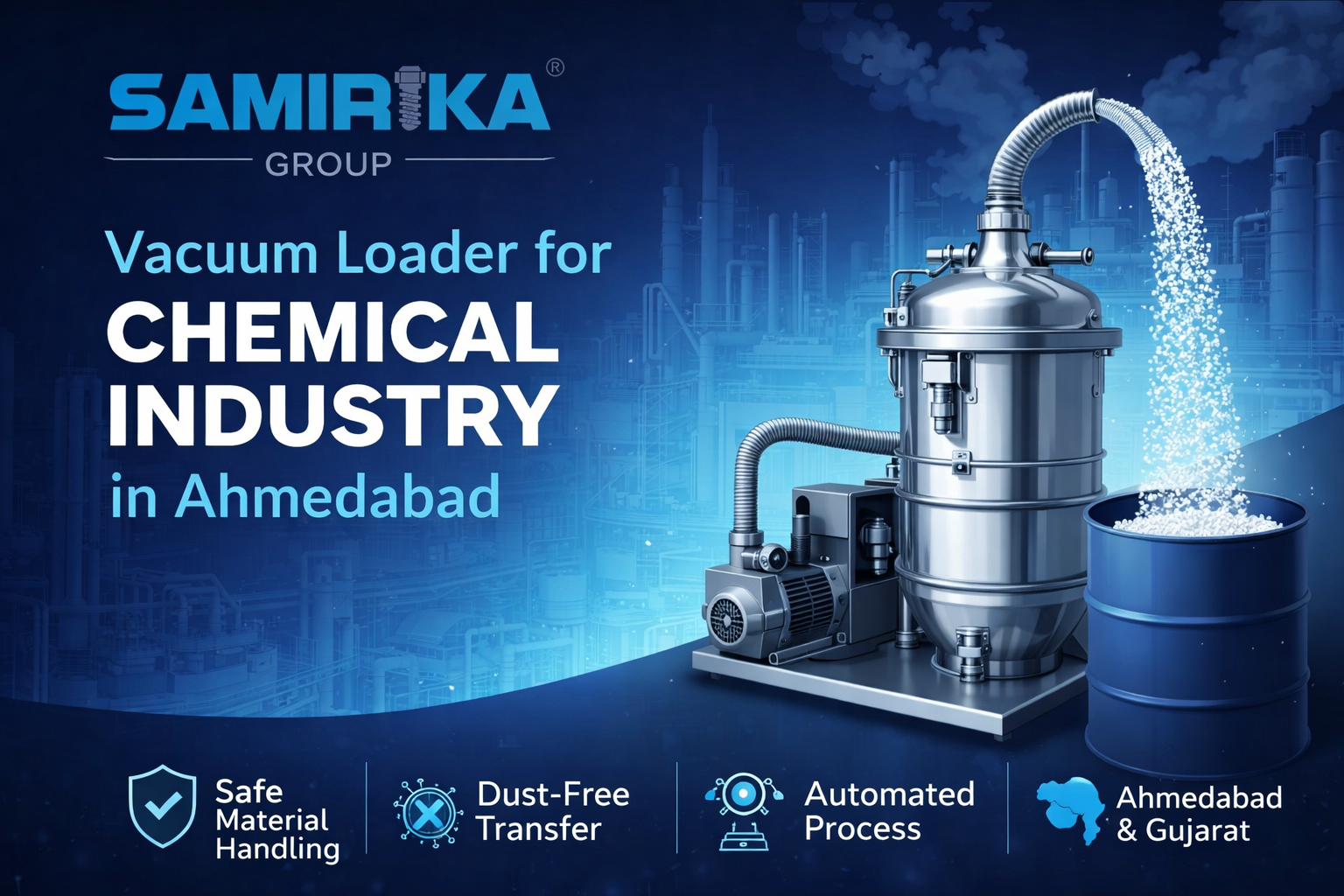
Industrial chemical manufacturing requires highly controlled material handling processes to maintain safety, production efficiency, and product purity. In modern chemical plants, powders, granules, pellets, and other bulk materials must be transferred between processing stages in a reliable and contamination-free manner. A vacuum loader for chemical industry in Ahmedabad is designed to support these requirements by enabling enclosed and automated material transfer within industrial production facilities.
Chemical processing environments often involve materials that are sensitive to dust exposure, contamination, or environmental conditions. Traditional manual handling methods can lead to product losses, inconsistent processing, and workplace safety concerns. Vacuum conveying technology offers a reliable alternative by transporting materials through sealed pipelines using controlled vacuum pressure.
Industrial manufacturing regions such as Ahmedabad, Gujarat have a strong presence of chemical plants, polymer industries, pharmaceutical units, and bulk material processing facilities. These industries increasingly rely on automated conveying systems to ensure efficient raw material handling, consistent production flow, and improved workplace hygiene. Vacuum loader conveying systems are widely used in such environments because they enable safe material transfer while maintaining process cleanliness.
Understanding Vacuum Loader Conveying Systems
A vacuum loader conveying system is an industrial material handling technology designed to move powders, granules, pellets, and other bulk solids through enclosed pipelines using vacuum pressure. The system operates by creating a pressure difference between the source location and the receiving point, allowing materials to be drawn through the pipeline safely and efficiently.
Unlike mechanical conveyors that rely on belts, screws, or chains, vacuum conveying systems use air pressure differentials to transport materials. This approach allows industries to move materials through complex plant layouts while maintaining sealed and controlled conditions. Because the system functions within a closed environment, it helps prevent dust emissions and reduces the risk of contamination during material transfer.
In chemical processing industries, vacuum loader systems are commonly integrated into production lines where materials must move between storage silos, mixers, reactors, packaging units, and other processing equipment. These systems support continuous production cycles while reducing the need for manual material handling.
Working Principle of Vacuum Loader Systems in Chemical Processing
The working principle of a vacuum loader system is based on controlled suction generated by a vacuum pump. The pump creates negative pressure inside the conveying pipeline, enabling materials to be transported toward the receiving unit through the pipeline.
A typical vacuum loader system includes several key components that operate together to ensure efficient conveying:
- Vacuum pump responsible for generating the suction force required for material transfer
- Conveying pipeline designed to maintain airtight conditions for efficient vacuum operation
- Material receiver or hopper where transported materials are collected and stored
- Filters and separators used to remove dust or fine particles during the conveying process
During operation, the vacuum pump creates a pressure difference that draws air and material through the pipeline. As the material reaches the receiver, filters separate the conveyed product from the airflow, allowing the material to settle in the receiving container while the air is safely released. This process ensures smooth and controlled transportation of materials without exposing them to external contamination or causing dust leakage.
Importance of Vacuum Loaders in Chemical Manufacturing Facilities
Chemical manufacturing processes often involve handling powdered raw materials, additives, pigments, and fine particles that must be transferred safely between different production stages. A vacuum loader for chemical industry in Ahmedabad plays an important role in maintaining controlled material movement across processing systems.
Because chemical powders can be hazardous or sensitive to environmental exposure, vacuum conveying systems provide a secure method for transporting materials while maintaining process stability. The enclosed design prevents dust dispersion, improves plant cleanliness, and reduces the risk of product contamination.
In addition to safety benefits, vacuum loader systems contribute to operational efficiency. Automated material transfer reduces manual intervention, ensures consistent feeding of processing equipment, and supports continuous production workflows. Industries operating in chemical processing zones across Gujarat frequently integrate vacuum conveying technology with automated control systems, allowing precise monitoring and control of material transfer operations.
Key Features of Vacuum Loader Systems for Chemical Industry
Vacuum loader conveying systems incorporate several technical features that make them suitable for industrial material handling applications:
- Stable vacuum generation using high-performance vacuum pumps
- Enclosed conveying system that prevents dust leakage and contamination
- Capability to handle powders, granules, and pellets with varying material properties
- Flexible system design adaptable to plant layouts and conveying distances
- Integration with automated control and monitoring systems
- Efficient filtration systems for dust separation and clean operation
- Easy maintenance and inspection through accessible system components
These features enable vacuum loader systems to operate reliably in demanding chemical manufacturing environments where process accuracy and product quality are critical.
Applications of Vacuum Loader Conveying Systems in Industry
Vacuum conveying technology is used in many industries where safe and dust-free material transfer is required. While the chemical industry remains one of the primary users, the technology is also widely applied in other industrial sectors:
- Chemical processing plants handling powders and bulk solids
- Pharmaceutical manufacturing units for sterile powder transfer
- Food processing facilities transporting ingredients and additives
- Plastic and polymer industries conveying pellets and resins
- Ceramic and glass manufacturing processes handling fine powders
- Cosmetic and personal care production involving powdered materials
These applications highlight the versatility of vacuum loader conveying systems in supporting automated material handling across different industrial environments.
Industrial Demand for Vacuum Conveying Systems in Ahmedabad
Ahmedabad has developed into one of India's major industrial hubs, hosting a wide range of chemical manufacturing units, polymer industries, pharmaceutical plants, and bulk material processing facilities. These industries require reliable systems for handling raw materials and intermediate products throughout the production cycle.
As production capacities continue to increase, industries are adopting automated material handling technologies to improve operational efficiency and maintain consistent product quality. Vacuum loader systems help manufacturers address challenges related to dust control, contamination prevention, and the safe transportation of chemical powders.
The demand for vacuum loader systems in Ahmedabad continues to grow as industries modernize their manufacturing facilities and integrate automated processing technologies. Reliable material conveying solutions allow companies to maintain smooth production flow while meeting strict quality and safety standards.
Factors to Consider When Selecting a Vacuum Loader System
Selecting the appropriate vacuum loader system for chemical processing operations requires careful evaluation of several technical factors. These considerations ensure that the system operates efficiently while meeting the specific needs of the manufacturing process:
- Type of material being transported — powders, granules, or pellets
- Particle size and material density affecting conveying performance
- Required conveying distance and production capacity
- Compatibility with existing production equipment
- Filtration and dust separation requirements
- System automation and control features
Careful system selection helps ensure efficient material handling while minimizing operational disruptions within chemical manufacturing facilities.
Vacuum Conveying vs Pneumatic Conveying Systems
Industrial facilities often compare vacuum conveying systems with pneumatic conveying systems when selecting a suitable material handling technology. While both systems use airflow to transport materials, they operate on different pressure principles.
| Factor | Vacuum Conveying | Pneumatic Conveying |
|---|---|---|
| Operating Principle | Negative pressure (suction) | Positive pressure (compressed air) |
| Best For | Shorter distances, contamination control | Longer distances, high-capacity transfer |
| Contamination Risk | Very low — enclosed system | Moderate — depends on configuration |
| Typical Application | Chemical, pharma, food powders | Bulk solids, cement, grain |
The choice between these systems depends on factors such as plant layout, material characteristics, and production requirements. Consulting with experienced material handling specialists helps industries select the most suitable technology for their operations.
Advantages of Using Vacuum Loaders in Chemical Processing
Vacuum loader systems offer several operational advantages for chemical manufacturing facilities. These advantages contribute to safer working environments and improved process efficiency:
- Dust-free material handling that improves plant cleanliness
- Reduced risk of contamination during material transfer
- Automated material movement supporting continuous production
- Improved workplace safety by minimizing manual handling
- Flexible system design adaptable to different plant layouts
- Efficient transfer of powders, granules, and bulk solids
These advantages make vacuum conveying technology an important component of modern chemical manufacturing processes, particularly in high-demand industrial regions like Ahmedabad and the broader Gujarat industrial corridor.
Frequently Asked Questions
Conclusion
Efficient material handling plays a vital role in maintaining productivity and process reliability within chemical manufacturing facilities. A vacuum loader for chemical industry in Ahmedabad provides a dependable solution for transporting powders, granules, and bulk materials through enclosed pipelines using controlled vacuum pressure.
By enabling dust-free and contamination-controlled material transfer, vacuum conveying systems help industries maintain product quality, workplace safety, and operational efficiency. As industrial manufacturing continues to adopt automation and advanced material handling technologies, vacuum loader systems remain an important component of modern chemical processing environments.