Get Your Free Quote…!

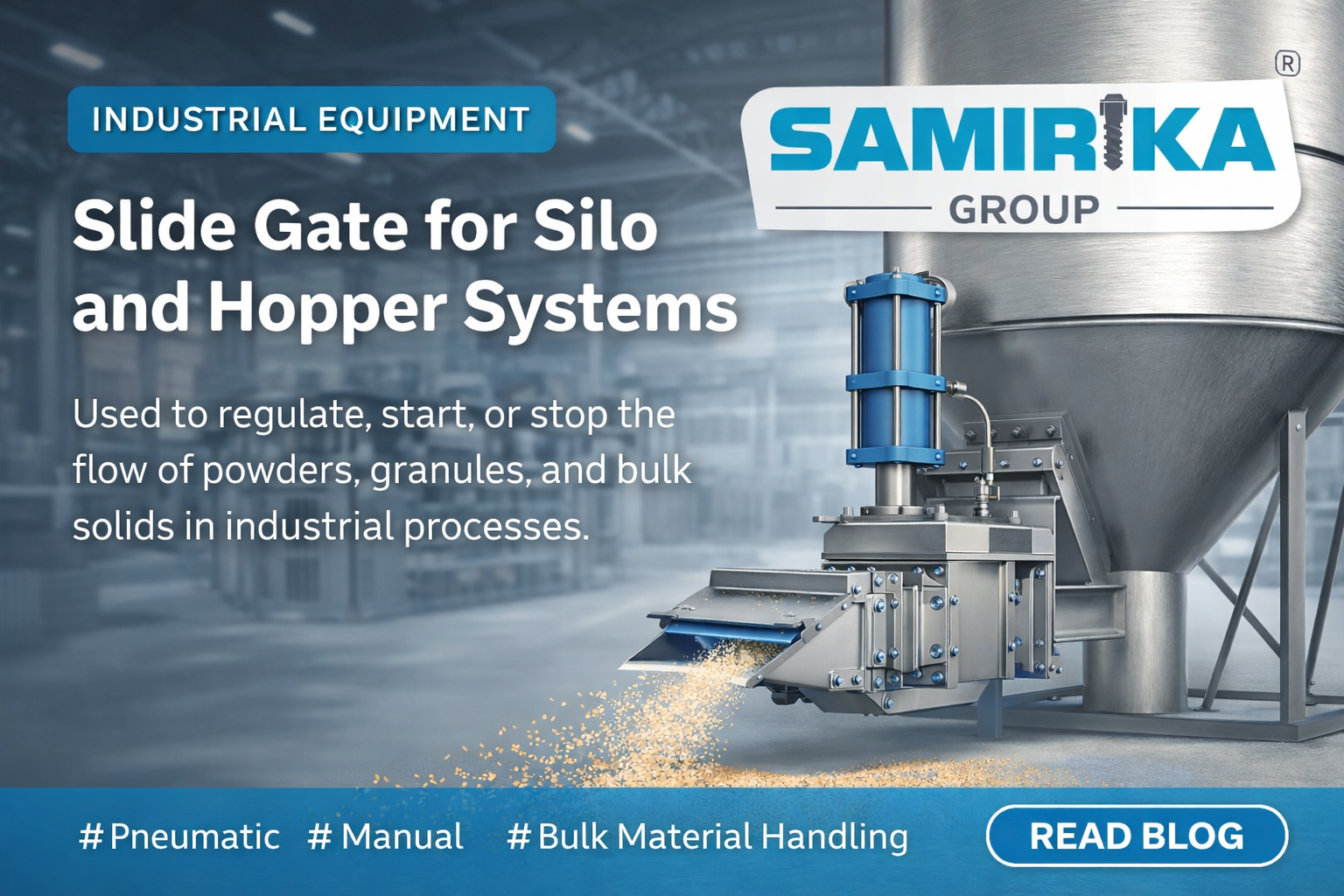
In industrial material handling, controlling the movement of bulk materials is essential for maintaining process efficiency and operational stability. A slide gate for silo and hopper systems is widely used to regulate, start, or stop the flow of powders, granules, and bulk solids across different processing environments. These gates act as a reliable control mechanism between storage units and downstream equipment, ensuring smooth material transfer without spillage or blockage.
Industries such as cement, chemicals, food processing, plastics, and agriculture rely heavily on these systems to maintain consistent material flow. Slide gates support controlled discharge from silos and hoppers, enabling precise feeding into conveyors, mixers, or packaging systems. Their versatility in handling different material types makes them a key component in modern bulk handling setups.
Slide gates are mechanical devices installed at the outlet of silos or hoppers to control the discharge of stored materials. They consist of a sliding blade or plate that moves across an opening to either allow or restrict material flow. Depending on process requirements, the operation can be manual or automated.
Within silo and hopper systems, slide gates ensure that materials are released in a controlled and consistent manner. This helps prevent sudden discharge, material wastage, and process interruptions. By maintaining regulated flow, they contribute to improved efficiency and reduced downtime in industrial operations.
Slide gates are typically categorized based on their mode of operation and application requirements. The two primary types are pneumatic slide gates and manual slide gates, each designed for specific use cases.
Pneumatic slide gates operate using compressed air and are ideal for automated systems where precision, speed, and repeatability are important. They are often integrated with control panels and sensors, enabling remote operation and synchronization with other equipment in the production line.
Manual slide gates are operated by an operator using mechanical controls. They feature a simpler design and are commonly used in applications where automation is not required or where operations are carried out on a smaller scale.
The working principle of a slide gate is based on the movement of a flat plate or blade across an opening. When the gate is open, material flows freely through the outlet of the silo or hopper. When closed, the blade blocks the passage, stopping the material flow.
In pneumatic systems, actuators control the gate movement through air pressure, allowing fast and precise operation. In manual systems, the gate is controlled using a lever or handwheel, providing direct control over discharge.
The design focuses on minimizing leakage and ensuring smooth operation, even when handling fine powders or abrasive materials. Proper sealing and alignment are essential to maintain efficiency and prevent material loss.
Slide gates are engineered to perform reliably under varying industrial conditions. Their design supports efficient material handling and long-term operation.
These features make slide gates an essential component in silo and hopper installations where consistent material control is required.
Slide gates are widely used in industries that involve bulk material storage and transfer. Their ability to regulate flow makes them suitable for both processing and handling operations.
Their adaptability ensures reliable performance across a broad range of industrial environments.
The use of slide gates in silo and hopper systems offers several operational advantages. They help improve process control while maintaining efficient material flow.
These advantages make slide gates a practical solution for industries focused on optimizing material handling performance.
Selecting the appropriate slide gate depends on several application-specific factors. A clear understanding of these parameters helps ensure reliable and efficient operation.
Considering these aspects helps in selecting a slide gate that aligns with system requirements and operational goals.
Regular maintenance is important to ensure smooth operation and extend the service life of slide gates. Routine inspection and timely servicing help prevent issues such as leakage, jamming, or component wear.
It is essential to check gate alignment, seal condition, and the movement of actuators or manual components. Cleaning the gate area prevents material buildup that could affect performance. In pneumatic systems, maintaining proper air pressure and actuator condition is critical for consistent operation.
Following these basic practices helps ensure reliable performance and minimizes downtime in industrial processes.
As industries move toward automation and advanced material handling systems, the role of slide gates continues to evolve. Modern systems increasingly incorporate smart controls, sensors, and automated mechanisms to enhance efficiency and monitoring.
Pneumatic slide gates are widely used in automated setups where precise control and remote operation are required. Integration with digital control systems enables real-time monitoring and improved process accuracy.
This ongoing shift highlights the growing importance of efficient and reliable flow control solutions in modern industrial operations.
A slide gate is used to control the flow of bulk materials from silos and hoppers. It helps regulate, start, or stop the discharge of powders, granules, and solids during industrial processes.
Pneumatic slide gates operate using compressed air and are suited for automated systems, while manual slide gates are operated by hand and used in simpler or smaller-scale applications.
Yes, slide gates are designed to handle a variety of materials, including powders, granules, and bulk solids, ensuring smooth and controlled flow across applications.
They provide controlled material flow, reduce wastage, and ensure consistent feeding into processing equipment, improving overall system performance.
Pneumatic slide gates are specifically designed for automated systems and can be integrated with control panels and sensors for precise, remote operation.
Maintenance includes checking alignment, inspecting seals, cleaning material buildup, and ensuring proper operation of actuators or manual components to maintain performance and longevity.
Filter Using Product Tags