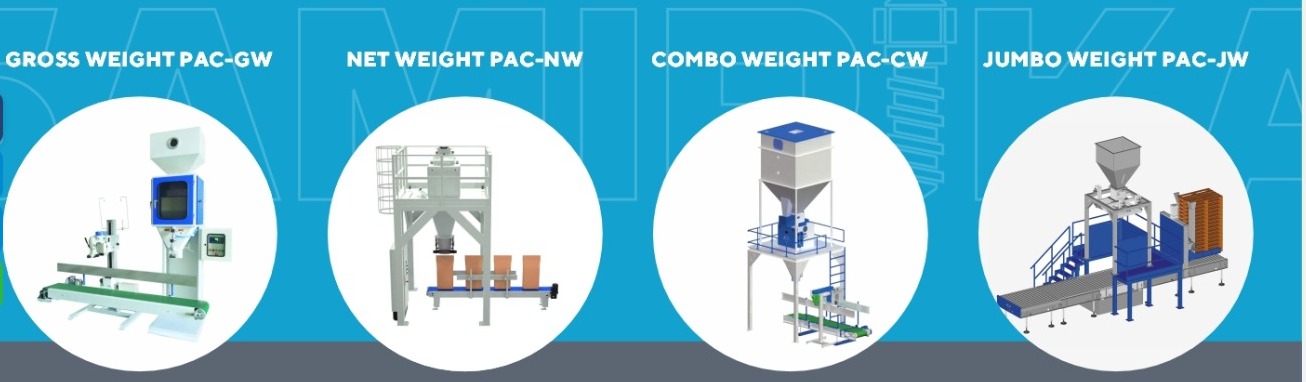
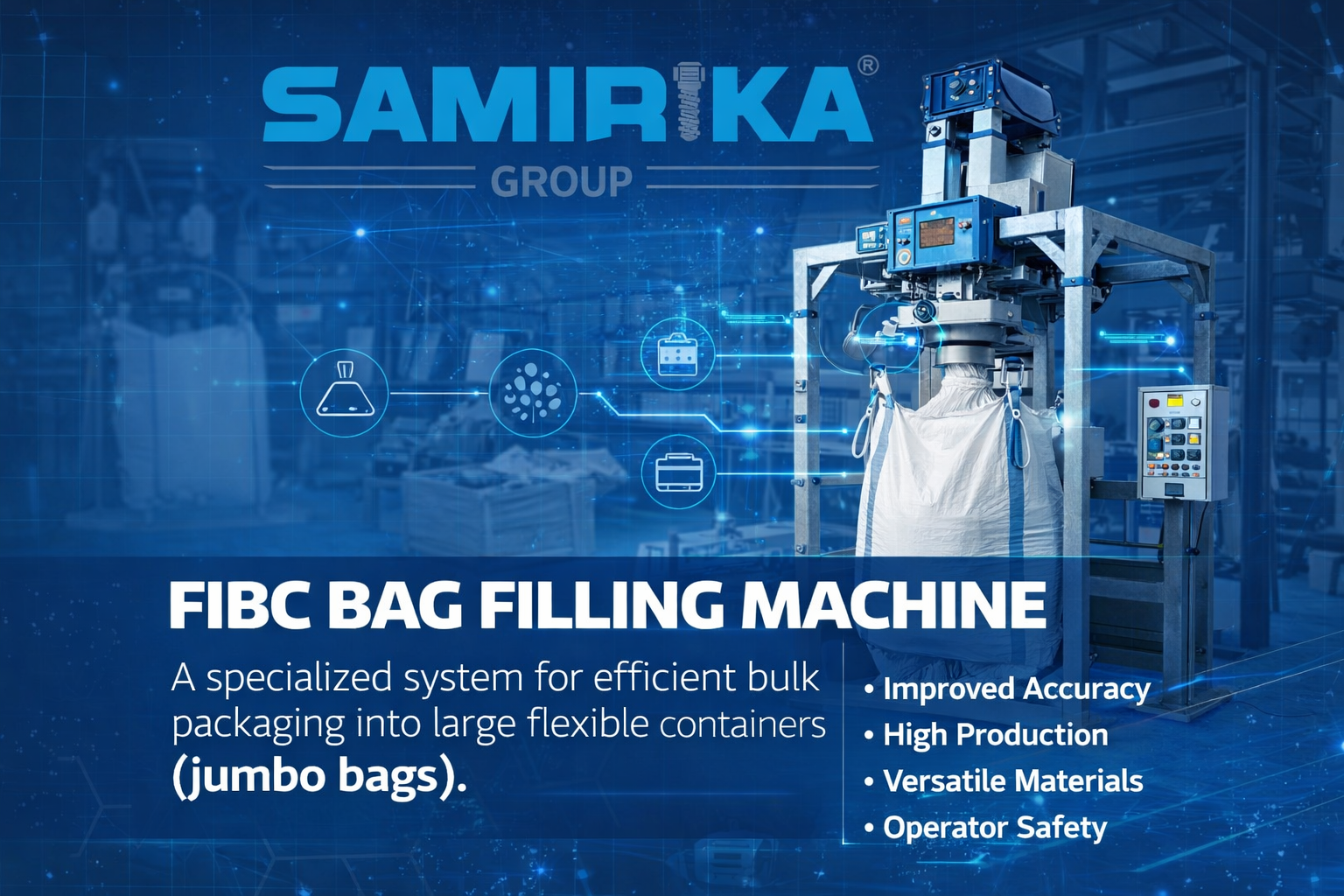
A specialized industrial system designed for efficient packaging of bulk materials into flexible intermediate bulk containers, commonly known as jumbo bags or big bags.
Ahmedabad, Gujarat
Samirika Group
Industrial Article
Overview
FIBC Bag Filling Machine
An FIBC bag filling machine is a specialized industrial system designed for efficient packaging of bulk materials into flexible intermediate bulk containers (FIBC), commonly known as jumbo bags or big bags. These machines play a critical role in industries where large quantities of materials must be packed, stored, and transported in a controlled and organized manner.
In modern manufacturing and material handling environments, maintaining consistency, safety, and operational efficiency is essential. An FIBC bag filling machine supports these requirements by automating the processes of filling, weighing, and securing bulk materials. This ensures uniform output while reducing manual intervention, making it a reliable solution for handling powders, granules, and bulk solids.
Technology
Understanding FIBC Bag Filling Machine Technology
The FIBC bag filling machine operates through an integrated system that combines mechanical, electrical, and control components to manage bulk packaging operations effectively. It is engineered to ensure precise filling into large-capacity bags while maintaining stability and accuracy throughout the process.
At the core of the machine is a controlled filling mechanism that regulates the discharge of materials into the bag. This is supported by an accurate weighing system that ensures each bag is filled according to predefined parameters. The structure typically includes a sturdy frame, bag holding arrangement, and discharge chute to facilitate smooth material flow.
Modern machines are equipped with advanced control systems that allow operators to monitor and adjust parameters such as filling speed, weight limits, and discharge rate. These controls help maintain consistent performance across production cycles and enhance overall process reliability.
Key Features
Key Features of FIBC Bag Filling Machine
The design and engineering of an FIBC bag filling machine focus on durability, precision, and ease of operation. These characteristics support its widespread use in bulk material handling applications.
Robust construction suitable for long-term industrial use
Automated bag positioning and handling system
High-precision weighing and controlled filling mechanism
Adjustable settings for different bag sizes and capacities
Integrated safety features for operator protection
User-friendly control interface for easy operation
Capability to handle high-speed bulk packaging operations
Data monitoring and recording for process tracking
These features enable the machine to deliver consistent performance, even in demanding production environments.
Applications
Industrial Applications of FIBC Bag Filling Machine
FIBC bag filling machines are widely used across various industries due to their ability to manage large volumes of materials efficiently. Their versatility makes them suitable for multiple bulk packaging applications.
Agriculture: Packaging of grains, seeds, fertilizers, and animal feed
Mining and minerals: Handling of ores, sand, aggregates, and powders
Construction: Packaging of cement, fly ash, and building materials
Chemicals: Filling of powders, granules, and industrial compounds
Food processing: Packaging of flour, sugar, rice, and dry ingredients
Petrochemical sector: Handling of polymers, resins, and additives
Waste management: Collection and transport of bulk waste materials
These applications demonstrate the importance of FIBC bag filling machines in maintaining safe, efficient, and scalable packaging operations.
Advantages
Advantages of Using FIBC Bag Filling Machine
The use of an FIBC bag filling machine offers several operational advantages that enhance efficiency in bulk material handling processes.
Improved accuracy in weight and quantity control
Reduced manual labor and handling effort
Increased production speed and throughput
Consistent packaging quality across batches
Minimized material wastage during filling
Enhanced safety for operators and the work environment
Improved handling and storage of bulk materials
These benefits contribute to smoother operations and higher productivity in industrial settings.
Selection Guide
Factors to Consider Before Choosing an FIBC Bag Filling Machine
Selecting the appropriate FIBC bag filling machine requires careful evaluation of operational needs and material characteristics. Each industry has specific requirements that influence machine performance.
Type of material to be handled, such as powder or granular form
Required filling capacity and production volume
Level of accuracy and precision needed for weight control
Compatibility with different bag sizes and designs
Degree of automation required for operations
Integration with existing material handling systems
Maintenance requirements and long-term reliability
Considering these factors helps ensure the machine aligns with production goals and operational efficiency.
Maintenance
Maintenance and Operational Reliability
Proper maintenance of an FIBC bag filling machine is essential to ensure consistent performance and extend its service life. Regular inspection and servicing of key components help prevent downtime and maintain operational efficiency.
Operators should monitor critical elements such as weighing systems, discharge mechanisms, and control panels. Routine cleaning and calibration are important to maintain accuracy and prevent contamination, particularly in industries handling sensitive materials.
Scheduled maintenance also allows early detection of potential issues, ensuring smooth and uninterrupted production.
Future Trends
Future Trends in FIBC Bag Filling Systems
With advancements in industrial automation and smart manufacturing, FIBC bag filling machines are evolving with enhanced capabilities. Integration with digital systems, real-time monitoring, and data analytics is becoming more common in modern setups.
These systems are increasingly designed to support automation across the entire packaging line, enabling seamless coordination between material handling, filling, and logistics. Such advancements are improving efficiency, traceability, and overall process control in bulk packaging operations.
FAQs
Frequently Asked Questions
An FIBC bag filling machine is used to package bulk materials into large flexible containers known as jumbo bags. It ensures accurate filling, efficient handling, and consistent packaging for industrial applications.
The machine uses integrated weighing systems to monitor the quantity of material during filling. Once the preset weight is reached, the system automatically stops the flow, ensuring consistent results.
Yes, FIBC bag filling machines are designed to handle a wide range of materials, including powders, granules, and bulk solids across multiple industries.
These machines are built for large-scale operations and can handle high production volumes efficiently while maintaining accuracy and consistency.
Most machines include safety sensors, emergency stop mechanisms, and protective guards to ensure safe operation and reduce risks for operators.
Routine maintenance is recommended to ensure optimal performance. Regular checks and calibration help maintain accuracy and extend the machine's lifespan.
Yes, FIBC bag filling machines can be integrated with conveyors, storage systems, and automated production lines to create a complete bulk handling solution.
Conclusion
Conclusion
FIBC bag filling machines are an essential component of modern bulk material handling systems. They provide a structured and efficient approach to packaging large volumes of materials while maintaining accuracy, safety, and operational reliability. By automating the filling process, these machines help industries achieve consistent output, reduce manual effort, and improve overall productivity. As industrial operations continue to evolve, FIBC bag filling systems remain a dependable solution for managing large-scale packaging requirements across diverse sectors.